
Dr. Lyndon Porter, Research Plant Pathologist, USDA-ARS, Prosser, WA
The pea leaf weevil (Sitona lineatus) can be a major issue in dry pea production regions of the Pacific Northwest, USA on spring and winter grown peas. Over-wintering adult weevils (Figure 1) emerge in the spring from non-farmed areas surrounding pea fields or from alfalfa and vetch fields when air temperatures reach 54.5-57°F or above. With the introduction of winter peas, there is also an opportunity depending on the fall planting date for sufficient foliage to be available for weevils to overwinter in pea fields. The adult weevils prefer to feed on the lower leaves of young pea plants in the spring causing a characteristic “U-shaped” notching pattern around the edges (Figure 2). Although it does not appear to be common or preferred by the weevils, they can also feed on primary stems and can cut them off at the base (Figure 3). Stem removal causes a stooling response by the plant which can delayed its maturity. After adult females lay their eggs in the spring at the base of a stem or in soil crevices around a plant, larvae hatch from eggs in approximately 16 to 18 days, depending on the temperature. Many growers in the Pacific Northwest have only paid attention to the foliar damage (Figure 4) the adult weevils cause in the early spring and may apply foliar fungicides (Table 1) to prevent economic damage. Economic thresholds for foliar sprays to control adult weevils is when 30% of clam-shaped leaves have feeding damage at the second to third node stages. Although growers pay attention to foliar damage, they may not be paying attention to feeding damage larvae cause on the nitrogen-fixing nodules or roots of the pea plant. This feeding damage may have the greatest economic impact (Figures 5 and 6) and can completely strip the roots of nodules.
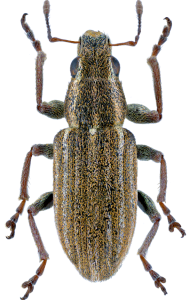
Figure 1. Adult pea leaf weevil (Photo: Steven Van Vleet).
In spring-planted peas, one cultural practice to limit pea leaf weevil damage is to delay the planting of a pea crop to avoid the peak emergence and feeding time of the adult weevils, thus preventing severe foliar damage, reducing total number of eggs laid in a field, and limiting damage done by larvae to the nodules/roots. However, this cultural practice is not feasible for winter pea production because the peas are planted in the fall when plants may develop significant foliage going into winter. By the time the adult pea weevils emerge in the spring, there is plenty of foliar food from the surviving winter pea leaves, allowing them ample food to reproduce. In fact, there is often sufficient foliar coverage going into winter to allow adult weevils protective coverage for over-wintering in the fall. In addition, winter pea nodules often develop prior to the onset of winter and survive on roots and are available as preferred larval food in the spring.
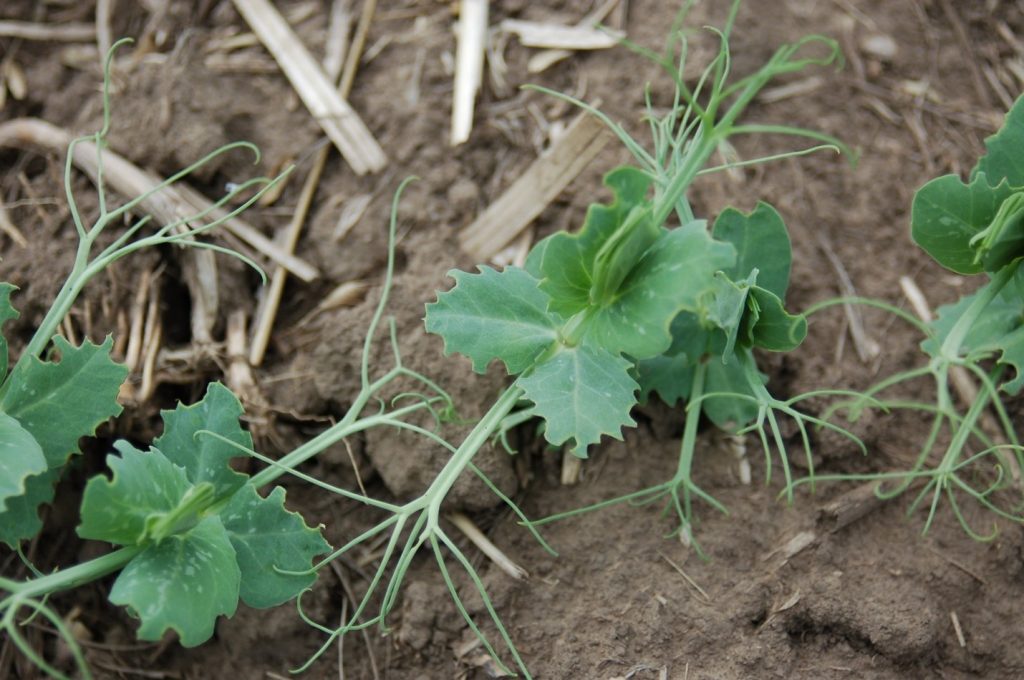
Figure 2. Leaf notching caused by the pea leaf weevil on pea (Photo: Lyndon Porter).
This past year in 2024, we harvested whole plants (roots and foliage) from three winter pea fields in the Pendleton, OR production area. One of these fields did not have any signs of pea leaf weevil and had beautiful nodulation on the root systems of the plants. The other two fields harvested had significant signs of pea leaf weevil notching on the leaves and upon washing root systems clean from soil, it was observed nodules that were once present on the root system had been reduced to small “stumps” at their attachment sites (Figure 6). Most root systems observed had been stripped clean of nodules. Where nodules were still in existence, larvae of the pea leaf weevil could be found inside them. It was observed that feeding damage from the larvae also allowed other soilborne organisms to infect or colonize the damaged nodule tissue (Figure 7). Based on observations in Pendleton, OR and other locations in Idaho, larvae are stripping winter pea root systems clean of nitrogen-fixing nodules. Therefore, it is critical potential management practices be used to manage the larval stage and its damage. Larval damage to nodules is significantly reducing the amount of nitrogen available to the plant, producing wounded roots that can lead to infections by other soil organisms and can reduce the total residual nitrogen available
in the soil to subsequent rotational crops. Fertilizer costs, specifically nitrogen, have significantly increased over the last few years and controlling pests that significantly reduce residual soil nitrogen levels is critical. Two potential seed treatments have been mentioned that may have the systemic activity needed to manage the larval damage on nodules, these include thiamethoxam and chlorantraniliprole (Table 1). However, the efficacy of these products may be compromised due to the period of time between planting winter peas in the fall (usually September to the middle of October) in the Pacific Northwest and when the protection is needed in the spring (late February to May) to protect the nodules from weevils. It could be up to nine months after planting that protection is needed from these seed treatments to manage the weevils. Research on the use of seed treatments or foliar applications with systemic action that can protect winter pea nodules from larval feeding is necessary to advance integrated pest management approaches to managing this major pea insect pest.
Table 1. List of registered products labeled to manage pea leaf weevil. Check labels to ensure products are registered for your area (not a comprehensive list of all potential products).
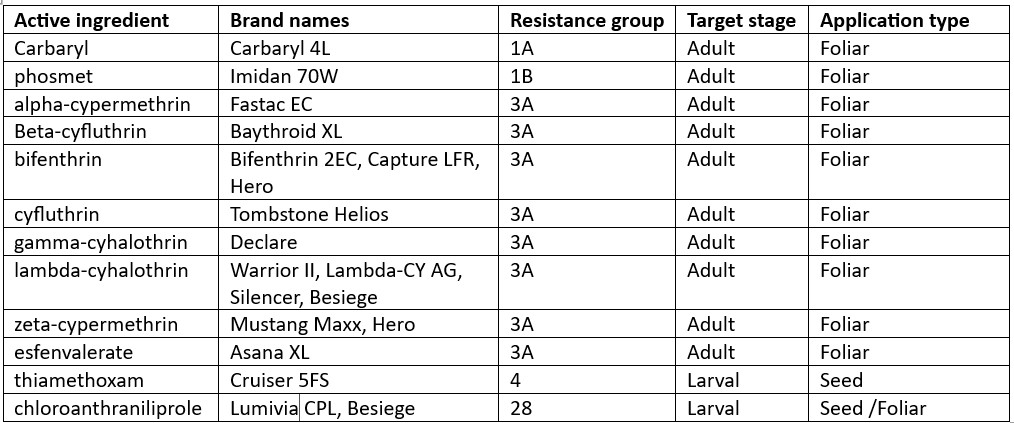
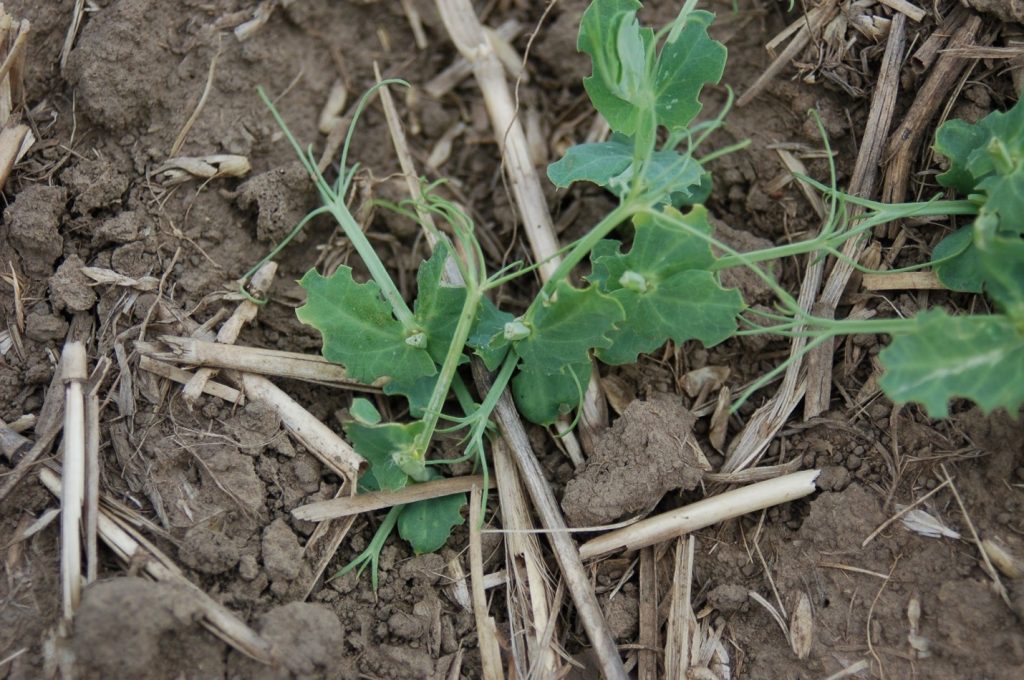
Figure 3. Primary pea stems cut off near the base by pea leaf weevil adults (Photo: Lyndon Porter).
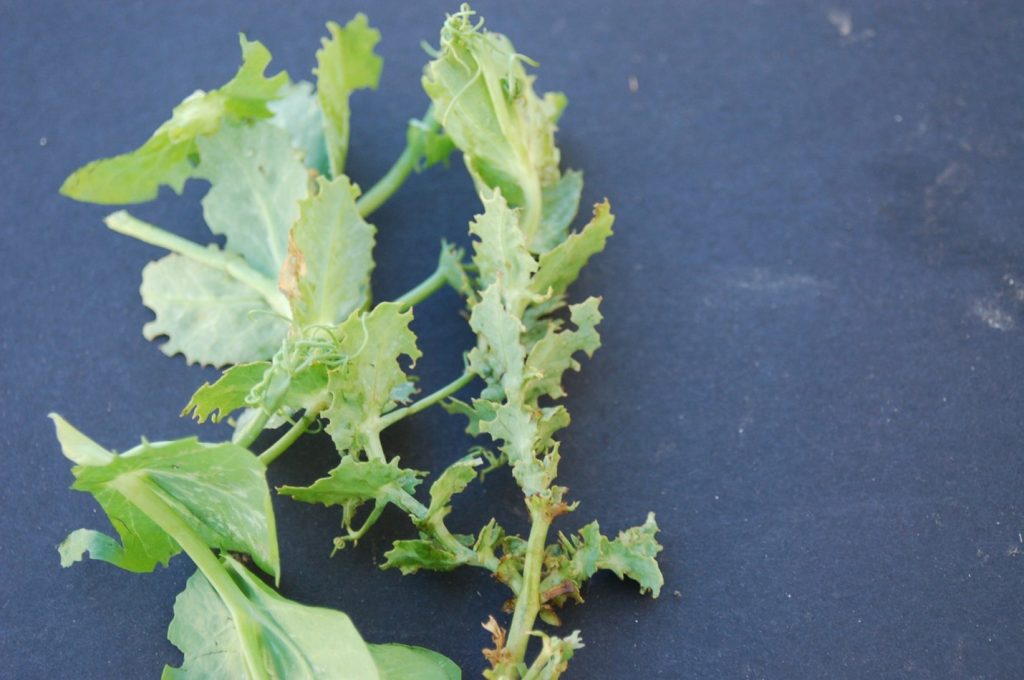
Figure 4. Pea foliage severely damaged by pea leaf weevil (Photo: Lyndon Porter).

Figure 5. Pea leaf weevil larva feeding on a nitrogen-fixing pea nodule (Photo: Lyndon Porter)
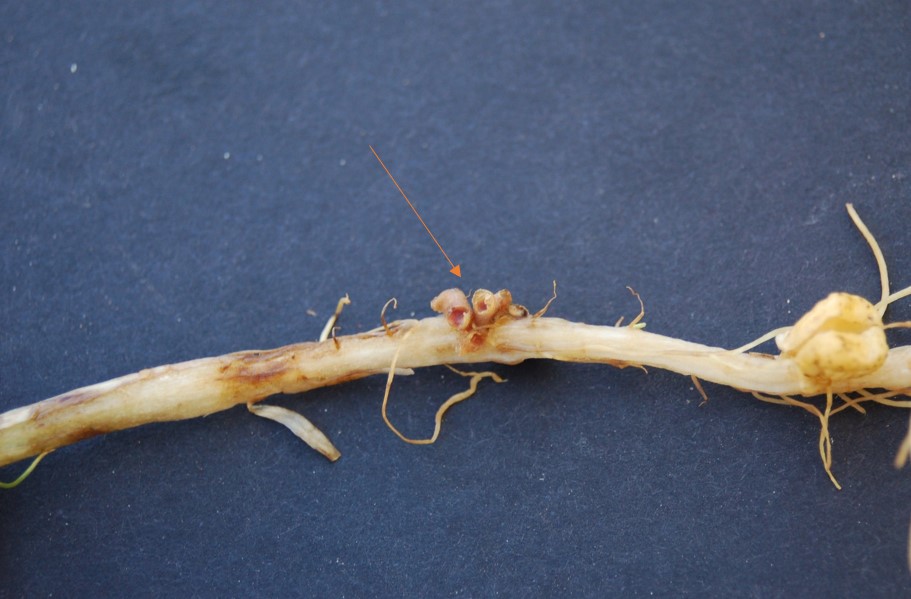
Figure 6. Larval feeding damage to nitrogen-fixing nodules on a pea root. Nodules have been hollowed out. (Photo: Lyndon Porter).

Figure 7. Nitrogen-fixing pea nodule that has been damaged by pea leaf weevil larvae feeding and has become infected with other soilborne organisms (Photo: Lyndon Porter).
References
Cárcamo, H. A., Vankosky, M. A., Wijerathna, A., Olfert, O. O., Meers, S. B., Evenden, M. L. 2018. Progress toward integrated pest management of pea leaf weevil: A review. Annals of the Entomological Society of America 111:144-153.
Hamon, N., Bardner, R., Allen-Williams, L., and Lee, J. B. 1987. Flight periodicity and infestation size of Sitona lineatus. Annals of Applied Biology 111: 271-284.
Prescott, H. W., and Reeher, M. M. 1961. The Pea Leaf Weevil: an introduced pest of legumes in the Pacific Northwest. Technical Bulletin No. 1233. Agricultural Research Service, United States Department of Agriculture.