
Dr. Audrey Kalil, Agronomist/Outreach Coordinator, Horizon Resources Cooperative
Root rot is an increasing problem in pea and lentil acres across North Dakota and Montana, and diagnosis is important in developing a management strategy. Symptoms of root rot may be mistaken for herbicide injury, water logging or drought stress for example, and without proper diagnosis yield loss to root rot can continue undetected for years until it becomes unmanageable in a field. Armed with proper diagnostics, growers can institute important management strategies that will allow for successful pulse crop production for years to come.
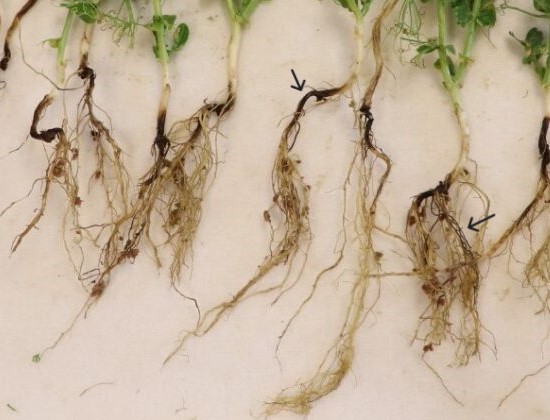
The most common root rot pathogens we see on pea and lentil in North Dakota are the water-mold Aphanomyces euteiches and the fungal pathogen Fusarium. Several species of the genus Fusarium can cause root rot in peas and lentils, but Fusarium avenaceum and Fusarium oxysporum have been most frequently identified in pathogen surveys conducted by NDSU plant pathologists. Both Aphanomyces and Fusarium can infect the seedlings right at germination, especially under warm soil conditions. In a field where they are both present, we typically see Aphanomyces infecting first and then Fusarium following after. To detect Aphanomyces in a field, it is best to sample early in the season (V4-V6) before Fusarium predominates in the roots. Symptoms of these two root rots are distinct, with Aphanomyces causing a golden brown discoloration of the tissue, which becomes soft and is easily removed (Figure 1). Fusarium usually causes a black/brown discoloration beginning at the seed attachment site and then moving into the roots (Figure 2). When they are both present, however, the roots can simply appear dark brown and shrunken, with few lateral roots and nodules.
Figure 1: Healthy roots (A) compared to roots infected with Aphanomyces euteiches (B). Arrows indicate disease symptoms.

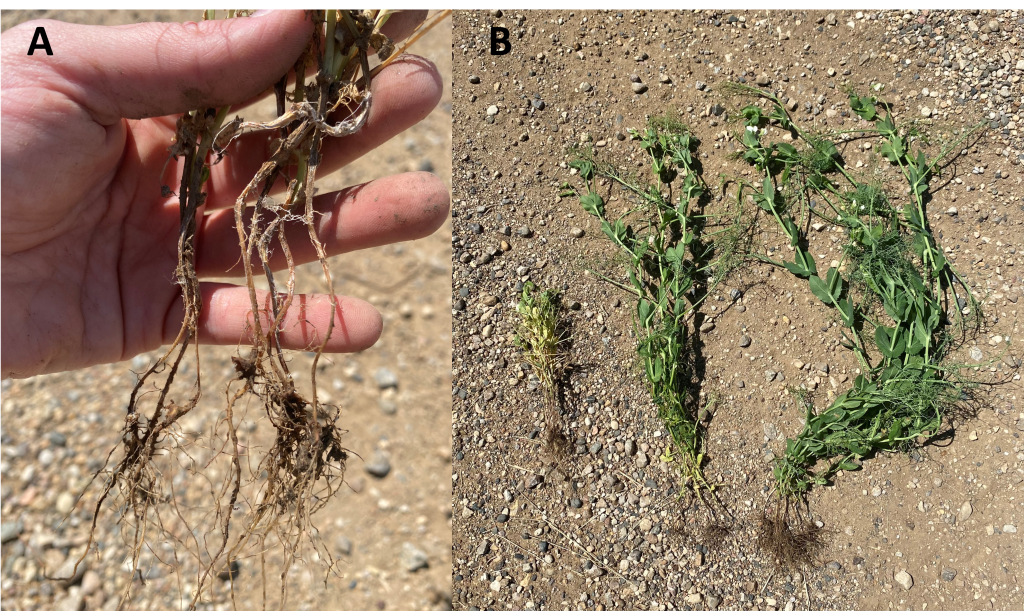
When root disease is severe, you will see above ground symptoms such as large bare patches, stunting, wilting and plant death. Root rot affected patches in a field are frequently associated with where water accumulates or travels (Figure 3). This is likely why it is so frequently confused with water stress or compaction. To determine if root rot is the cause of these symptoms, dig up plants within the diseased area and healthy area to compare the roots (Figure 4). If the roots in the affected patch appear white and healthy, then root rot is unlikely. If however the roots in the diseased patch are discolored compared to the healthy area, then root rot should be considered and confirmed via laboratory diagnosis (Figure 5).
Figure 3: Lentil field with root rot symptoms (black arrows).
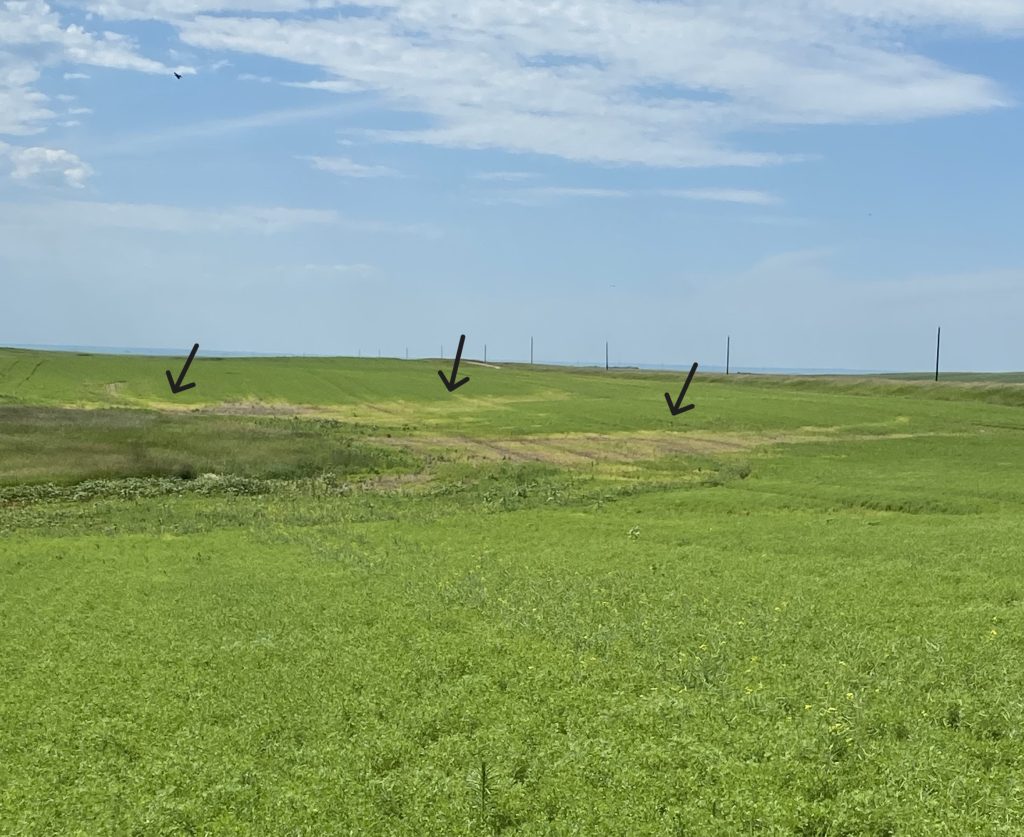
Figure 4: Pea field with arrows indicating diseased area and healthy area.
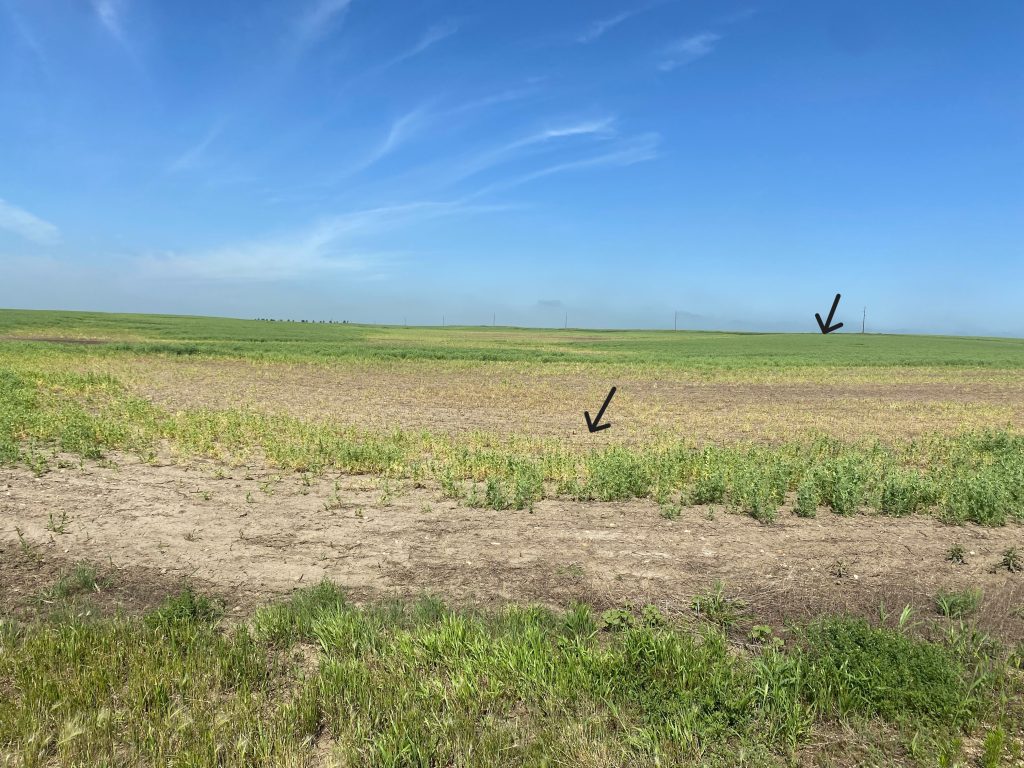
Figure 5: Panel A shows from left to right: highly diseased, moderately diseased and most healthy peas collected from the diseased and healthy areas in the field shown in Figure 4. Panel B shows the damaged stem and roots from the most diseased peas in panel A.
Laboratory diagnosis of root rot is important because multiple pathogens can cause disease, and the management tactics may differ based on what pathogen is present. Culturing is a method by which diseased roots are placed on fungal growth media, the pathogen grows out of the root and then is identified via microscopy. Root samples can be submitted to the Montana State University or the North Dakota State University Plant Diagnostic labs for diagnosis via this method. There is also a new laboratory test which can evaluate soil and plants for Fusarium avenaceum, Fusarium oxysporum and Aphanomyces euteiches (PRR1-Q)available from the National Agriculture Genotyping Center located in Fargo, ND. This is a DNA based approach that can determine how much of each pathogen is present in a sample based on the number of copies of a DNA sequence specific to those organisms. It is highly sensitive, and may be better able to detect Aphanomyces compared to traditional culturing methods. To learn more about this new test visit the NAGC’s website: https://genotypingcenter.com/services/pulse-crops/
If your field tests positive for Aphanomyces, then it is important to extend your crop rotation. A crop rotation study conducted in North Dakota has found that by combining a seed applied fungicide, with early planting and a 6 year crop rotation, economically viable yields can still be obtained when this pathogen is present. To learn more about managing root rot visit https://pulsecropsipm.org/news/
Author Bio:

Dr. Audrey Kalil served as the Plant Pathologist at the NDSU Williston Research Extension Center from 2015-2024 where she led an applied research program focused on management of plant disease in durum, peas, lentils, and chickpeas, as well as nodulation and nitrogen fixation in pulse crops. Audrey currently serves growers in NW ND and NE MT as an Agronomist/Outreach Coordinator with Horizon Resources Cooperative.
Email: akalil@horizonresources.coop Twitter: @Audrey_Kalil
Published January 16th, 2024